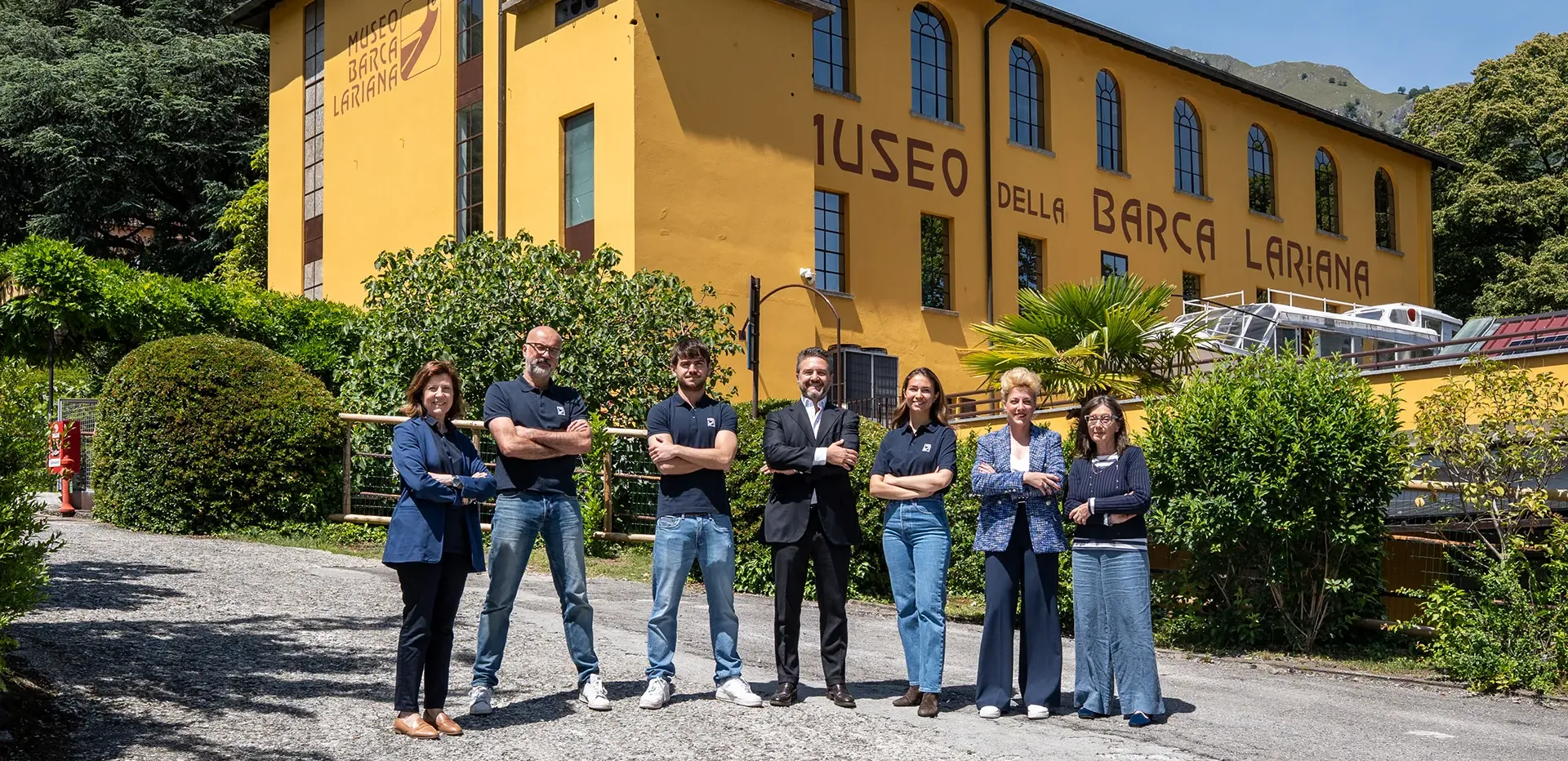
In Pianello del Lario, inside a 19th-century spinning mill overlooking Lake Como, the Museo Barca Lariana houses one of the most extraordinary collections of historic boats in the world.
Spread across the museum’s halls and exhibition spaces, over 400 boats span centuries of nautical culture: rowboats, gondolas, fishing boats, hunting boats, and smuggling vessels, as well as recreational and racing motorboats, sailboats, antique workboats, engines, documents, and onboard artifacts.
The museum explores the world of boating as a living subject: from its roots on Lake Como to Italian history, and on to the international routes that have brought together people, places, and visions. From the ancient Romans through the 20th century and beyond, every vessel embodies technology, beauty, hard work, courage, and human adventures.
Visiting the Museo Barca Lariana means embarking on a journey that is constantly evolving, fueled by research, restoration, and new discoveries. It is a cultural heritage site open to visitors, schools, families, and anyone who wants to explore boating from a new perspective.
From large racing boats to workboats, from Lake Como boats to historic motorboats, the museum tour takes visitors on a journey through construction techniques, notable figures, shipyards, and memories of the water.
The museum also offers activities for schools and young children, including historical tours and fun, educational workshops designed to directly engage children and teens.